Self-Driving Semi-Trucks For Sale: A Comprehensive Guide to the Future of Freight
The future of freight transportation is rapidly evolving, and at the forefront of this revolution are self-driving semi-trucks. These autonomous vehicles promise to reshape the logistics industry, offering the potential for increased efficiency, reduced costs, and enhanced safety. While still in their nascent stages of commercialization, the prospect of purchasing a self-driving semi-truck is becoming increasingly realistic. This comprehensive guide will delve into the world of self-driving semi-trucks for sale, exploring their benefits, challenges, key considerations, and what you need to know before making a purchase.
What are Self-Driving Semi-Trucks?
Self-Driving Semi-Trucks For Sale: A Comprehensive Guide to the Future of Freight
Self-driving semi-trucks, also known as autonomous trucks or driverless trucks, are heavy-duty vehicles equipped with advanced sensor systems, powerful computers, and sophisticated algorithms that enable them to navigate roads and highways without human intervention. These trucks utilize a combination of technologies such as:
- Lidar (Light Detection and Ranging): Uses laser beams to create a 3D map of the surroundings.
- Radar: Employs radio waves to detect objects, even in adverse weather conditions.
- Cameras: Provide visual input for object recognition, lane detection, and traffic signal identification.
- GPS: Offers precise location data for navigation.
- Artificial Intelligence (AI): Processes sensor data, makes real-time decisions, and controls the truck's movements.

The Society of Automotive Engineers (SAE) defines six levels of driving automation, from Level 0 (no automation) to Level 5 (full automation). Currently, most self-driving semi-trucks being tested and developed fall into Level 4 automation. This means they can handle all driving tasks in specific conditions, but may require human intervention in certain situations or environments.
Why Consider a Self-Driving Semi-Truck? The Benefits
The allure of self-driving semi-trucks stems from their potential to revolutionize the freight industry in several key areas:
- Increased Efficiency: Autonomous trucks can operate 24/7 without breaks, leading to faster delivery times and increased utilization of assets. This translates to more miles covered and more freight delivered.
- Reduced Labor Costs: By automating the driving task, companies can significantly reduce their reliance on human drivers, leading to substantial savings in wages, benefits, and recruitment costs.
- Improved Safety: Human error is a major cause of accidents involving semi-trucks. Self-driving trucks, with their advanced sensors and AI systems, are designed to minimize the risk of accidents caused by fatigue, distraction, or impaired judgment.
- Fuel Efficiency: Autonomous trucks can optimize speed and acceleration, resulting in improved fuel economy and reduced carbon emissions.
- Reduced Congestion: Platooning, where multiple self-driving trucks travel closely together, can reduce wind resistance and improve traffic flow, leading to less congestion.
- Addressing Driver Shortage: The trucking industry is facing a severe driver shortage, which is expected to worsen in the coming years. Self-driving trucks can help fill this gap and ensure the efficient movement of goods.

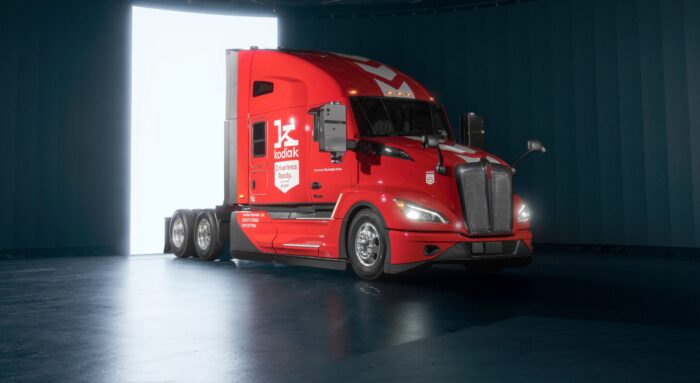
Self-Driving Semi-Trucks for Sale: Navigating the Market
While fully autonomous Level 5 trucks are still some time away from widespread commercial availability, Level 4 autonomous trucks are entering the market. Here's what you need to consider when exploring self-driving semi-trucks for sale:
- Manufacturers and Technology Providers: Several companies are actively developing and offering self-driving truck technology. These include established truck manufacturers partnering with autonomous driving technology companies, as well as startups specializing in autonomous driving systems. Researching and comparing different providers is crucial. Some key players to watch include:
- TuSimple: A leader in autonomous trucking technology, focusing on long-haul routes.
- Waymo Via: Google's autonomous trucking division, leveraging Waymo's extensive self-driving experience.
- Aurora: Developing a comprehensive autonomous driving platform applicable to various vehicle types, including semi-trucks.
- Embark: Focusing on autonomous trucking for long-haul freight.
- Daimler Truck (with Torc Robotics): Combining Daimler's truck manufacturing expertise with Torc Robotics' autonomous driving technology.
- Level of Automation: Determine the level of automation you require. Level 4 trucks typically operate autonomously on highways but may require human intervention in urban areas or during complex maneuvers. Consider your operational needs and the routes your trucks will be running.
- Geofencing and Operational Design Domain (ODD): Understand the ODD within which the autonomous truck is designed to operate. This defines the specific geographic areas, weather conditions, and road types where the truck can function autonomously.
- Data and Connectivity: Autonomous trucks generate vast amounts of data. Ensure the truck is equipped with robust connectivity solutions for data transmission, remote monitoring, and over-the-air software updates.
- Safety and Redundancy: Prioritize safety by choosing trucks with redundant systems for critical functions such as braking, steering, and power. Evaluate the manufacturer's safety testing and validation procedures.
- Maintenance and Support: Autonomous trucks require specialized maintenance and support. Inquire about the manufacturer's service network, training programs, and remote support capabilities.
- Cost and Financing: Self-driving semi-trucks are currently more expensive than traditional trucks. Factor in the initial purchase price, ongoing operating costs, and potential financing options.
- Regulatory Compliance: Stay informed about the evolving regulatory landscape for autonomous vehicles. Ensure the truck complies with all applicable federal, state, and local regulations.
Practical Advice and Actionable Insights
- Pilot Programs: Consider participating in pilot programs offered by autonomous truck developers. This allows you to test the technology in your operations and gather valuable data before making a significant investment.
- Route Optimization: Identify suitable routes for autonomous trucking based on factors such as highway miles, traffic density, and weather conditions.
- Driver Training: Even with autonomous trucks, human drivers will still play a role. Train drivers to operate the trucks in manual mode, monitor the autonomous system, and handle exceptions.
- Insurance and Liability: Review your insurance coverage and understand the liability implications of operating autonomous trucks.
- Data Security: Implement robust data security measures to protect the sensitive data generated by autonomous trucks.
Potential Challenges and Solutions
- High Initial Cost: The high initial cost of self-driving semi-trucks can be a barrier to adoption. Solutions include government incentives, leasing options, and cost-sharing arrangements.
- Regulatory Uncertainty: The lack of clear regulations for autonomous vehicles can create uncertainty for operators. Industry collaboration and government leadership are needed to establish a clear regulatory framework.
- Public Perception: Public concerns about the safety of autonomous vehicles can hinder adoption. Transparency, education, and rigorous safety testing can help build public trust.
- Cybersecurity Risks: Autonomous trucks are vulnerable to cybersecurity attacks. Implementing robust security measures and regular software updates can mitigate these risks.
- Job Displacement: Concerns about job displacement among truck drivers need to be addressed. Retraining programs and alternative employment opportunities can help transition workers to new roles.
Price Table: Self-Driving Semi-Trucks For Sale
| Manufacturer/Technology Provider | Model/System | Level of Automation | Estimated Price (USD) | Key Features | Availability |
|---|---|---|---|---|---|
| TuSimple | Autonomous Driving System | Level 4 | $150,000 - $250,000 (retrofit) | Long-haul focus, HD mapping, autonomous driving on highways | Currently available for select partners |
| Waymo Via | Waymo Driver | Level 4 | Pricing varies based on integration | Advanced sensor suite, AI-powered decision-making, integration with truck manufacturers | Partnering with OEMs for future deployment |
| Aurora | Aurora Driver | Level 4 | Pricing varies based on integration | Comprehensive autonomous driving platform, adaptable to various truck models | Testing and development phase |
| Embark | Embark Driver | Level 4 | Pricing varies based on integration | Focus on long-haul autonomous trucking, vision-first approach | Testing and development phase |
| Daimler Truck (Torc Robotics) | Autonomous Truck | Level 4 | Pricing not yet publicly available | Integrated solution from established truck manufacturer, redundancy systems | Expected in the coming years |
Note: Prices are estimates and may vary depending on specific configurations, features, and partnerships.
Frequently Asked Questions (FAQ)
Q: When will self-driving semi-trucks be widely available?
A: While Level 4 autonomous trucks are entering the market, widespread adoption is expected to take several years. Factors such as regulatory approvals, technological advancements, and public acceptance will influence the timeline.
Q: Are self-driving semi-trucks safe?
A: Safety is a top priority for autonomous truck developers. These trucks are equipped with advanced sensors and AI systems designed to minimize the risk of accidents. However, ongoing testing and validation are crucial to ensure safety in real-world conditions.
Q: Do self-driving semi-trucks eliminate the need for human drivers?
A: Level 4 autonomous trucks can operate autonomously in specific conditions, but human drivers are still needed to handle exceptions, monitor the system, and operate the trucks in manual mode when necessary.
Q: What are the regulatory requirements for operating self-driving semi-trucks?
A: The regulatory landscape for autonomous vehicles is still evolving. Operators must comply with all applicable federal, state, and local regulations, which may vary depending on the location and level of automation.
Q: How much do self-driving semi-trucks cost?
A: Self-driving semi-trucks are currently more expensive than traditional trucks. The price depends on the level of automation, the manufacturer, and the specific features. Retrofit systems typically range from $150,000 to $250,000. Integrated solutions from truck manufacturers are expected to be priced competitively, but specific pricing is not yet widely available.
Conclusion: Embracing the Autonomous Future of Freight
Self-driving semi-trucks represent a transformative technology with the potential to revolutionize the freight industry. While challenges remain, the benefits of increased efficiency, reduced costs, and enhanced safety are compelling. By carefully considering your operational needs, researching different providers, and staying informed about the evolving regulatory landscape, you can position your company to capitalize on the autonomous future of freight. As the technology matures and regulations become clearer, self-driving semi-trucks will undoubtedly become an increasingly common sight on our highways, driving efficiency and innovation in the logistics sector.

