Semi Truck Tire Carrier For Sale: A Comprehensive Guide to Choosing the Right One
Introduction: The Unsung Hero of Long Hauls – Your Semi Truck Tire Carrier
For semi-truck drivers, time is money. Every minute spent on the side of the road due to a flat tire is a hit to their bottom line. While roadside assistance is an option, having a spare tire readily available can significantly reduce downtime and get drivers back on the road quickly. This is where a semi-truck tire carrier comes into play. A semi-truck tire carrier is a vital piece of equipment designed to securely hold and transport spare tires on a commercial vehicle. It's more than just a bracket; it's a safety net, a productivity booster, and a long-term investment.
Semi Truck Tire Carrier For Sale: A Comprehensive Guide to Choosing the Right One
When searching for a "Semi Truck Tire Carrier For Sale," you're entering a market filled with various options, each designed for different needs and budgets. This comprehensive guide will walk you through everything you need to know to make an informed decision, ensuring you choose the right tire carrier for your semi-truck. We'll cover the types of carriers available, key features to look for, installation tips, maintenance advice, and address some frequently asked questions.
Section 1: Why Invest in a Semi Truck Tire Carrier? The Benefits Unveiled
Before diving into the specifics of different tire carriers, let's understand the core benefits of having one:
- Reduced Downtime: As mentioned earlier, a flat tire can be a major setback. Having a spare tire readily accessible allows for a quicker tire change, minimizing downtime and keeping you on schedule.
- Cost Savings: Repeated calls to roadside assistance for tire changes can add up significantly. A tire carrier and the ability to change your own tire can save you money in the long run.
- Enhanced Safety: Changing a tire on the side of a busy highway is inherently dangerous. While a tire carrier doesn't eliminate the risk, it allows you to move the truck to a safer location (if possible) before beginning the tire change.
- Peace of Mind: Knowing you have a readily available spare tire provides peace of mind, especially when driving long distances or in remote areas.
- Compliance: In some jurisdictions, having a spare tire may be a requirement for certain types of commercial vehicles. A tire carrier ensures you are compliant with regulations.
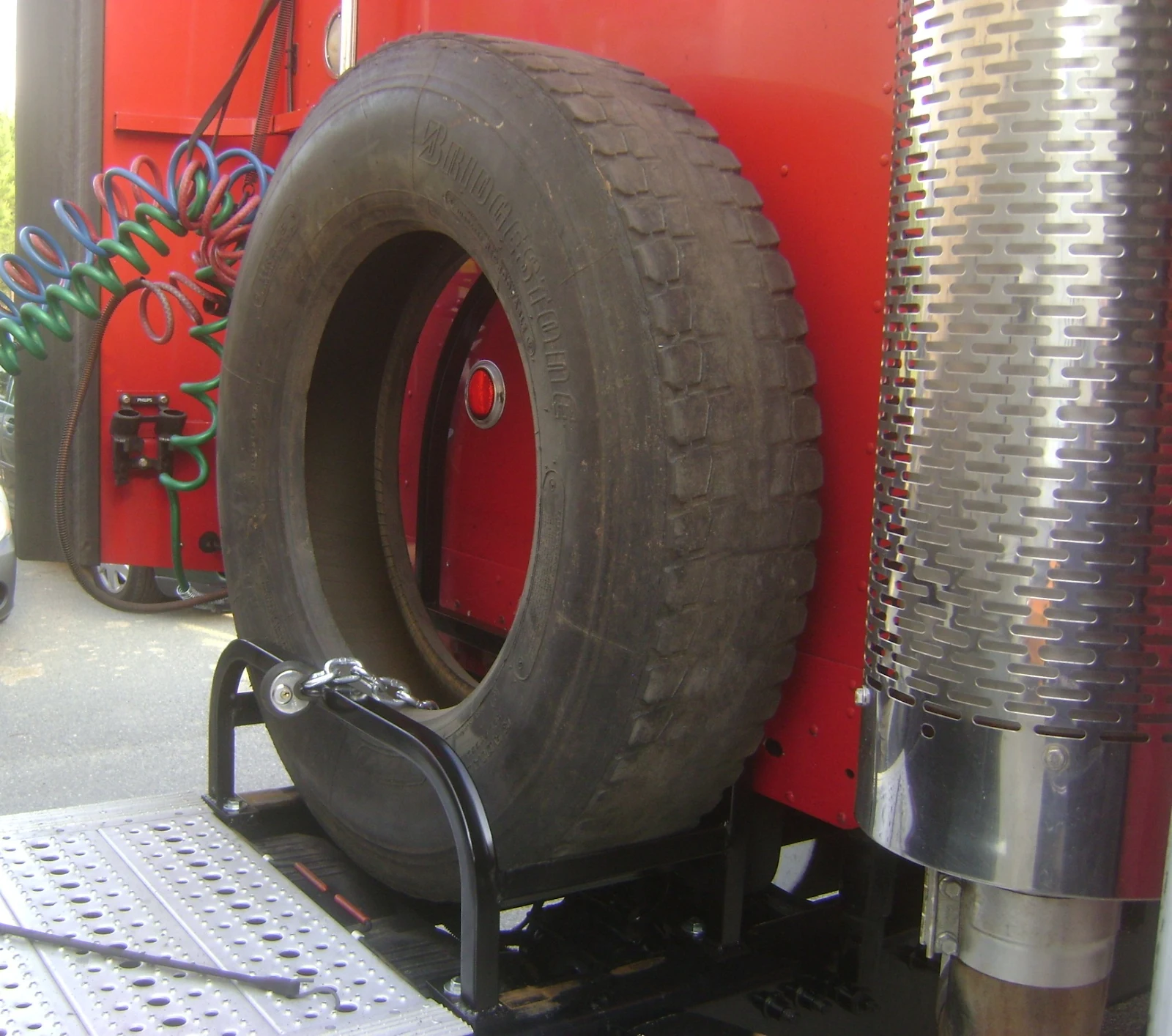
Section 2: Types of Semi Truck Tire Carriers: Finding the Perfect Fit
The market offers a range of semi-truck tire carriers, each with its own advantages and disadvantages. Understanding the different types will help you narrow down your options:
-
Frame-Mounted Tire Carriers: These carriers are typically mounted directly to the truck's frame, offering a robust and secure solution. They are often positioned on the side or rear of the truck.
- Pros: High weight capacity, durable, secure.
- Cons: Can be more expensive, may require professional installation, can affect aerodynamics slightly.

-
Undermount Tire Carriers: These carriers are mounted underneath the truck bed, utilizing available space.
- Pros: Keeps the tire out of sight, doesn't impact aerodynamics significantly.
- Cons: Can be difficult to access, may reduce ground clearance, susceptible to corrosion from road debris.
-
Headache Rack Tire Carriers: Integrated into the headache rack (a protective barrier behind the cab), these carriers offer a convenient and space-saving solution.
- Pros: Combines tire storage with cab protection, easy access.
- Cons: Can be expensive, may require a specific headache rack design, weight distribution needs careful consideration.
-
Bumper-Mounted Tire Carriers: As the name suggests, these carriers attach to the truck's bumper.
- Pros: Relatively inexpensive, easy to install.
- Cons: Limited weight capacity, may obstruct taillights or license plate, less secure than frame-mounted options.
-
Swing-Away Tire Carriers: These carriers swing away from the truck, providing easy access to the spare tire and the rear of the truck. They are available in frame-mounted and bumper-mounted configurations.
- Pros: Easy access to the spare tire and truck bed, convenient for loading and unloading.
- Cons: Can be more expensive, requires space to swing open, hinges need regular maintenance.

Section 3: Key Features to Look For: Prioritizing Your Needs
When evaluating different semi-truck tire carriers, consider these essential features:
- Weight Capacity: Ensure the carrier can handle the weight of your spare tire. Overloading the carrier can lead to failure and potential safety hazards. Check the tire size and weight and compare that to the carrier's rating.
- Material and Construction: Look for carriers made from high-strength steel or aluminum, with durable welds and corrosion-resistant coatings. Powder coating is a good option for resisting rust and weathering.
- Ease of Use: Consider how easy it is to access and remove the spare tire. A carrier that is difficult to operate can be frustrating in an emergency. Look for features like winches or levers that assist with lifting and lowering the tire.
- Security: The carrier should securely hold the tire and prevent theft. Look for locking mechanisms or the ability to use padlocks.
- Compatibility: Ensure the carrier is compatible with your truck's make, model, and frame configuration. Check the mounting points and dimensions carefully.
- Adjustability: Some carriers offer adjustability to accommodate different tire sizes or positions.
- Installation Requirements: Determine whether you can install the carrier yourself or if you need professional installation. Consider the tools and expertise required.
- Weather Resistance: Exposure to the elements can take a toll on the tire carrier. Look for features like drain holes to prevent water accumulation and corrosion-resistant coatings.
Section 4: Installation Tips and Best Practices: A Step-by-Step Guide
While professional installation is recommended for some tire carriers, many can be installed by experienced mechanics or DIY enthusiasts. Here are some general tips and best practices:
- Read the Instructions: Always read the manufacturer's instructions carefully before starting the installation process.
- Gather Your Tools: Make sure you have all the necessary tools, including wrenches, sockets, torque wrench, drill (if required), and safety glasses.
- Safety First: Wear safety glasses and gloves to protect yourself. Use jack stands to support the truck if you need to lift it.
- Locate Mounting Points: Identify the designated mounting points on the truck frame or bumper.
- Attach the Carrier: Securely attach the carrier to the mounting points using the provided hardware.
- Torque to Specifications: Use a torque wrench to tighten the bolts to the manufacturer's specified torque values. Over-tightening can damage the hardware or frame.
- Test the Carrier: Once the carrier is installed, test it by loading and unloading the spare tire. Make sure the carrier is secure and operates smoothly.
- Regular Inspections: Inspect the carrier regularly for loose bolts, cracks, or corrosion.
Section 5: Maintenance and Care: Extending the Lifespan of Your Investment
Proper maintenance is essential to ensure the longevity and reliability of your semi-truck tire carrier. Here are some tips:
- Regular Cleaning: Clean the carrier regularly to remove dirt, grime, and road salt. Use soap and water, and rinse thoroughly.
- Lubrication: Lubricate moving parts, such as hinges and latches, with a suitable lubricant.
- Inspection: Inspect the carrier regularly for signs of wear, damage, or corrosion. Pay attention to welds, mounting points, and locking mechanisms.
- Tighten Bolts: Periodically check and tighten all bolts and fasteners.
- Touch-Up Paint: Repair any scratches or chips in the paint to prevent rust.
- Winter Protection: In areas with harsh winters, consider applying a rust inhibitor to protect the carrier from salt and corrosion.
Section 6: Potential Challenges and Solutions: Overcoming Obstacles
While semi-truck tire carriers offer numerous benefits, there can also be challenges:
- Compatibility Issues: Not all carriers are compatible with all trucks. Solution: Carefully research and verify compatibility before purchasing.
- Installation Difficulties: Some carriers can be challenging to install. Solution: Consider professional installation or seek assistance from experienced mechanics.
- Corrosion: Exposure to the elements can lead to corrosion. Solution: Choose a carrier with a durable corrosion-resistant coating and perform regular maintenance.
- Weight Distribution: Adding a spare tire can affect weight distribution. Solution: Consider the location of the carrier and adjust your load accordingly.
- Security Concerns: Tire theft is a concern. Solution: Choose a carrier with a secure locking mechanism and consider using a padlock.
Section 7: Price Table: Semi Truck Tire Carrier For Sale
| Carrier Type | Material | Weight Capacity | Features | Approximate Price Range |
|---|---|---|---|---|
| Frame-Mounted | Steel | 500 lbs+ | Heavy-duty, secure, durable | $400 - $1200 |
| Undermount | Steel | 300 lbs | Out of sight, space-saving | $300 - $800 |
| Headache Rack Integrated | Steel/Aluminum | 400 lbs | Combines tire storage and cab protection, easy access | $600 - $1500 |
| Bumper-Mounted | Steel | 200 lbs | Inexpensive, easy to install | $200 - $500 |
| Swing-Away (Frame) | Steel | 500 lbs+ | Easy access, durable, swings away from truck | $700 - $1800 |
| Swing-Away (Bumper) | Steel | 200 lbs | Easy access, swings away from truck, lighter duty | $400 - $900 |
Prices are estimates and may vary depending on the brand, retailer, and specific features.
Section 8: Frequently Asked Questions (FAQ)
- Q: How do I choose the right tire carrier for my truck?
- A: Consider your truck's make, model, tire size, weight, and budget. Research different types of carriers and read reviews.
- Q: Can I install a tire carrier myself?
- A: Some carriers are easier to install than others. If you are comfortable working on vehicles and have the necessary tools, you may be able to install it yourself. However, professional installation is recommended for complex carriers.
- Q: How often should I inspect my tire carrier?
- A: Inspect your tire carrier at least once a month, or more frequently if you drive in harsh conditions.
- Q: What is the best way to prevent rust on my tire carrier?
- A: Choose a carrier with a durable corrosion-resistant coating, clean it regularly, and apply a rust inhibitor.
- Q: Are there any legal requirements for having a spare tire carrier?
- A: Some jurisdictions may have specific requirements for commercial vehicles. Check with your local transportation authority.
- Q: Can a tire carrier affect my truck's fuel economy?
- A: Frame-mounted carriers, especially those positioned on the exterior, can slightly affect aerodynamics and fuel economy. Undermount carriers generally have less impact.
Conclusion: The Road to Informed Choice
Investing in a semi-truck tire carrier is a smart decision that can save you time, money, and hassle in the long run. By understanding the different types of carriers, key features, installation tips, and maintenance practices, you can make an informed choice that meets your specific needs and budget. Remember to prioritize safety, durability, and ease of use. A well-chosen and properly maintained tire carrier will provide peace of mind and keep you rolling smoothly down the road. Don't treat it as just an accessory, but as an essential part of your truck's safety and operational efficiency. Before finalizing your purchase, always double-check the carrier's compatibility with your specific truck model and consult with experienced professionals if needed. Happy trucking!

